People Who Dress For Themselves — Not For Anyone Else — Share These 7 Psychological Traits

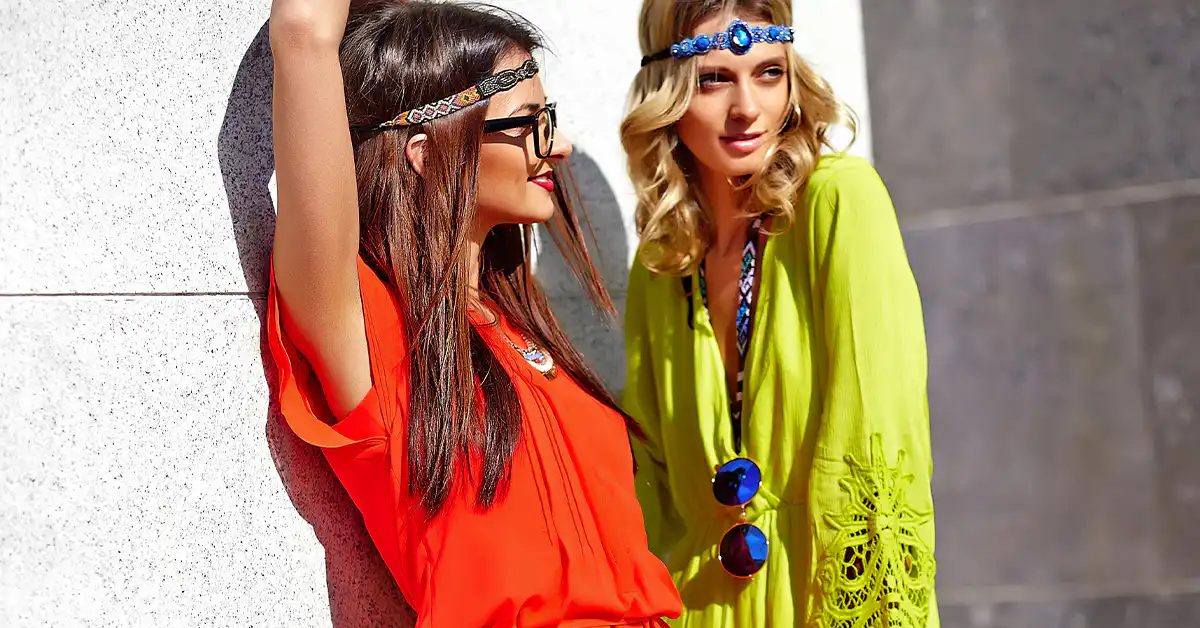
You can usually tell. Not from the clothes themselves — it’s got nothing to do with how expensive or fashionable the outfit is. It’s something in how the person wears it. A quality of not performing. Of being dressed for an audience of one, and that one person not being anyone in the room.
Most people dress in some negotiation between what they want and what they think the situation, the crowd, or the cultural moment requires. That negotiation is so constant for most people that the idea of opting out of it entirely seems either arrogant or oblivious. But people who have genuinely crossed over into dressing entirely for themselves aren’t arrogant or oblivious. They’ve just resolved a question that most people keep re-litigating every morning.
And the resolution tends to come with some specific psychological traits that are worth recognizing.
1. Have a high degree of internal locus of control
Locus of control refers to where a person believes the determining forces in their life originate — from inside themselves, or from external sources. People who dress entirely for themselves have, in at least this domain, made a clean internal attribution: this choice is mine, it reflects me, and it doesn’t require external ratification to be correct.
Research on internal locus of control links it to higher self-esteem, better stress management, and greater persistence in the face of obstacles. The same internal orientation that makes someone dress without checking the imaginary audience tends to show up in how they make decisions more broadly. They trust their own read.
2. Are less susceptible to social comparison than most people
Social comparison — the automatic process of evaluating your own situation against others’ — is one of the primary drivers of clothing choice for most people. What are people wearing here? What signals the right things in this context? Am I too much or too little? People who dress for themselves have largely stepped off this treadmill. Not because they’ve become indifferent to other people, but because the comparison process stopped feeling relevant to how they decide.
Social comparison research consistently links lower social comparison orientation to higher life satisfaction, less anxiety, and greater psychological well-being. The freedom from the comparison isn’t just stylistic. It extends into other domains — work, relationships, lifestyle choices — because the same muscle is being used in all of them.
3. Have done a significant amount of identity work
Dressing entirely for yourself requires knowing who you are. That sounds obvious until you try it — and discover that a lot of what you’d call personal taste is actually accumulated social instruction about what someone like you is supposed to wear. The person who has genuinely disentangled their own preferences from inherited ones has usually done that disentangling in other areas of their life too: values, relationships, career paths, and how they spend their time.
Identity research describes this process as identity achievement — the movement from an identity formed by external expectations toward one constructed through genuine exploration and commitment. Personal style, it turns out, is one of the more visible places this achievement shows up. The outfit is the output of the inner work.
4. Tolerate ambiguity and social friction without much distress
Dressing for yourself means occasionally wearing something that doesn’t land, that confuses people, that doesn’t fit the room. The person who can do this without much distress has developed a specific kind of resilience: the ability to tolerate the gap between how they intend to be received and how they actually are.
This tolerance generalizes. Research on social friction tolerance shows that people who can function comfortably in social situations where they’re not optimally approved of tend to take more creative risks, express disagreement more readily, and pursue unconventional paths with less hesitation. The person who will wear the unusual thing is usually also the person who will say the unusual thing.
5. Experience clothing as self-expression rather than social communication
For most people, clothing is primarily outward-facing: it communicates something to others. For people who dress for themselves, the direction is reversed. The outfit is inward-facing first — it reflects something to themselves, affirms something about who they are on that particular day, and creates a particular internal experience.
Research on enclothed cognition — the way clothing affects the wearer’s own psychological state — shows that people who dress with intentionality report significantly different internal states than people who dress functionally or socially. The clothes change how they feel. That’s the point. What other people make of it is secondary information.
6. Tend to have a settled, durable aesthetic rather than a trend-driven one
The person who dresses for themselves usually looks the same across the years. The photos from a decade ago have the same aesthetic fingerprint as today. There’s an internal consistency that isn’t stubbornness — the style evolves, but it evolves from the inside rather than in response to what’s currently in circulation.
Authenticity research links this kind of behavioral consistency over time to a stable, coherent self-concept. The aesthetic consistency isn’t rigidity. It’s evidence of an identity that doesn’t need to be renegotiated every season. They know what they like. They’ve known for a while.
7. Are genuinely less anxious about first impressions
Most people experience some version of social anxiety around what they’re wearing when it matters — the job interview, the first date, the event full of people they don’t know. The person who dresses for themselves has effectively removed clothing from the anxiety equation. The outfit is already resolved. They’re not arriving at the event and hoping it reads correctly. They’re arriving in something that already feels right to them, and what happens next is about everything else.
Social anxiety research shows that one of the primary generators of first-impression anxiety is the sense of being evaluated on things you can’t control or aren’t sure about. Removing the clothing uncertainty doesn’t eliminate social anxiety, but it does remove one of its reliable triggers. The person who has no second thoughts about their outfit is the one whose attention is fully available for the actual interaction.
The interesting thing about dressing for yourself is that it tends to read as confidence to everyone else in the room, even when the person wearing it isn’t particularly trying to project anything. The absence of social auditing has a quality that’s visible from the outside without being performed.
This is usually what people mean when they say someone has style. It’s not the clothes. It’s the fact that the clothes aren’t asking for anything. They’re not requesting approval or signaling aspiration or trying to blend into a particular group. They’re just — there. Settled. Occupied.
Getting to that place takes longer than a wardrobe edit. It takes knowing who you are well enough to dress them without consulting the room first. And that knowledge, when it arrives, shows up in what you wear. But it doesn’t stop there.