If Crowded Rooms Leave You Completely Drained, You Might Be A Highly Sensitive Person — Here’s 7 Reasons Why It Happens

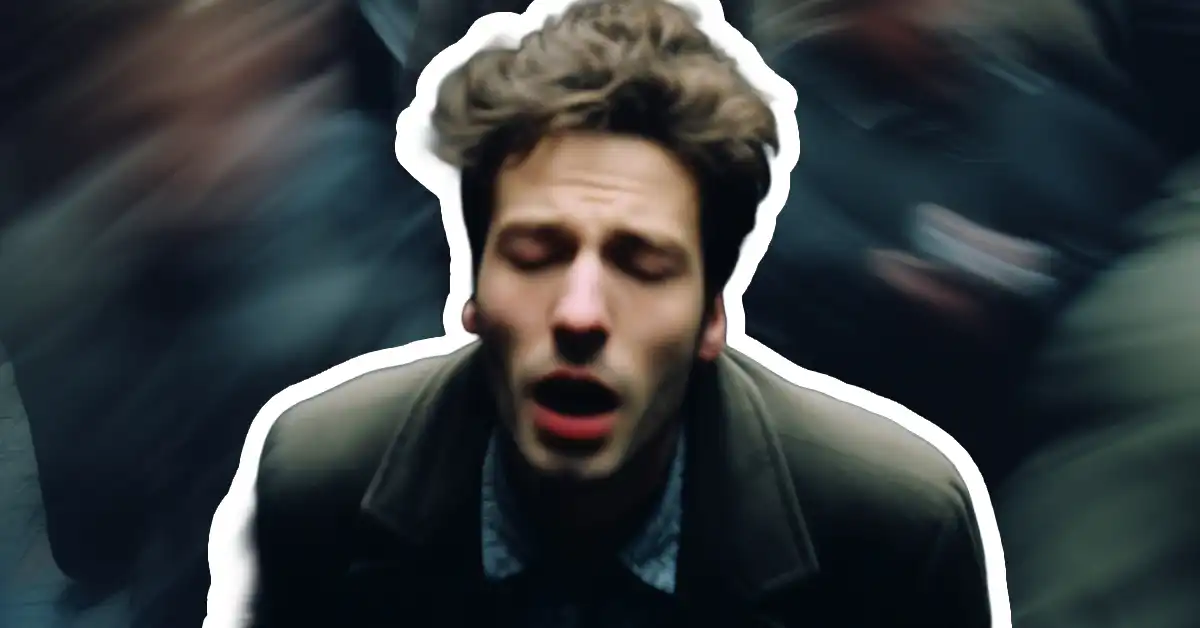
You leave the party before you want to leave. Not before you’re having fun — sometimes in the middle of having fun. Something just starts to tip. The noise, the number of conversations you’re tracking at once, the lights, the accumulated weight of a room full of people and stimulation, and at a certain point your system registers something like: that’s enough. Time to go.
For a long time you probably thought this was a flaw. Something to push through or apologize for. Other people stayed until the end and woke up energized. You left and spent the next day in quiet recovery and felt vaguely like you’d failed some social test you kept taking and not quite passing.
Here’s what was actually going on.
1. Being highly sensitive is a neurological trait, not a personality disorder
The term Highly Sensitive Person was introduced by psychologist Elaine Aron in the 1990s to describe a measurable trait — present in roughly 15-20% of the population — characterized by deeper processing of sensory and emotional information than the neurological average. It’s not anxiety. It’s not shyness. It’s not introversion, though there’s overlap.
Research on high sensitivity shows it as a genuine biological trait with identifiable neurological underpinnings — including a more reactive central nervous system and heightened activity in brain regions associated with awareness, empathy, and sensory processing. The crowded room doesn’t feel different to you because you’re fragile. It is different to you because you’re receiving more signal from it.
The trait is real. The exhaustion is real. The person who told you to toughen up didn’t know what they were talking about.
2. Process the environment more deeply than most people do
You notice the shift in someone’s tone before they’re aware of it themselves. You pick up the mood of a room within seconds of entering it. You catch details — the texture of a space, the dynamics between people, the undercurrent of a conversation — that most people in the same situation don’t register at all.
This isn’t hypervigilance in the anxious sense. It’s deep processing — a more thorough sensory and emotional appraisal of the environment that happens, largely, without effort or intention. The information arrives. All of it. Which is why, after a few hours in a complex environment, your processing system needs time offline to sort through everything it took in.
The depth of what you registered is the reason for the recovery time.
3. Feel other people’s emotions almost like your own
A movie with an emotionally difficult scene doesn’t just affect you — it stays with you. The person across the table who’s trying not to show that they’re upset: you feel it anyway. The ambient distress of people around you in a stressful public situation — a crowded transit platform, a tense meeting — lands differently for you than it does for most people.
Empathy research suggests that HSPs have a more permeable boundary between their own emotional states and those of people around them. This is the source of the remarkable empathy that many highly sensitive people demonstrate. It’s also why being around people in pain, or in spaces saturated with conflict and stress, costs something real.
You’re not imagining other people’s feelings. You’re receiving them.
4. Have a rich and complex inner life that can be hard to translate outward
The internal experience is detailed in a way that’s sometimes genuinely difficult to communicate to people who don’t share it. The way a piece of music affects you. The way a conversation replays and gets re-examined hours later. The multiple layers of meaning you picked up from an interaction that, to the other person, was probably just a quick exchange. The interior life runs at high resolution.
Research on HSP inner experience consistently finds that highly sensitive people report greater depth of emotional experience, more complex aesthetic responses, and more elaborate cognitive processing of both positive and negative events. The inner life isn’t just more intense. It’s more dimensional.
This is the part of high sensitivity that’s hardest to explain to people who don’t have it. It’s also one of the reasons so many HSPs end up in creative or relational work.
5. Get overwhelmed by things that don’t register as overwhelming to others
A day with too many transitions. Too many decisions. Too much noise. Too many people who each needed something. It all stacks in a way that doesn’t stack for people with less sensitive systems — and at the end of a day like that, you’re not just tired. You’re in a different category of done.
Overstimulation research in HSPs shows that this isn’t low endurance or poor stress management — it’s the predictable cost of processing more input at greater depth than an average nervous system does. The capacity is genuinely higher. The cost is also genuinely higher. Both things are true at the same time.
The overwhelm isn’t weakness. It’s the system working exactly as designed, at full capacity.
6. Need significantly more recovery time after intense experiences
The wonderful vacation that required a week to recover from. The exciting but exhausting project that left you needing long evenings of nothing for a month afterward. The good things that were also genuinely depleting, in ways that were hard to explain to people who’d just experienced the same good things and felt fine.
HSP research on recovery and restoration frames this as a feature of the trait rather than a dysfunction. A more sensitive system requires more deliberate restoration. The amount of input-processing that happens during an intense experience is simply higher, which means the recovery period needs to be longer and more protected. This isn’t high maintenance. It’s accurate maintenance.
You’re not recovering from too much fun. You’re recovering from too much of everything.
7. Have probably spent years being told you’re too much and not enough simultaneously
Too sensitive. Too intense. Too easily hurt. Too affected by things that don’t affect other people. But also: too quiet at the party. Not engaging enough. Not present enough in social situations where the HSP’s overwhelmed system has gone into self-protection mode and looks, from the outside, like aloofness.
Both criticisms landed. And the particular difficulty of the HSP experience is that they tend to internalize both too much and not enough at the same time, depending on who’s watching and what the situation requires. APA research on sensory processing sensitivity notes that HSPs are more susceptible to both positive and negative environmental influence, which means they’re also more susceptible to the accumulated impact of being told, from an early age, that the way they naturally experience the world is somehow wrong.
It wasn’t wrong. It was just more than the people around you were equipped to understand.
The reframe that changes things for most HSPs, when it comes, is usually this: the trait isn’t a deficiency that produces problems. It’s a trait that has real costs and real gifts — and the costs have been emphasized so heavily, for so long, that the gifts barely got a mention.
The gifts are real. The depth of connection, the perceptiveness, the creative and empathic capacity, the ability to notice what others miss — these aren’t consolation prizes. They’re part of the same package as the overwhelmingness, the recovery time, and the sensitivity to what’s happening in a room.
You’re not too sensitive. You’re sensitive in a way that the world hasn’t always known what to do with. That’s the world’s design problem, not yours. And the sooner you stop trying to fix it by being less of what you are, the sooner you get access to everything that comes with it.