7 Things Only Boomers Do At Restaurants That Millennials And Gen Z Will Never Understand

You can spot them from across the dining room. Not by their age, necessarily—by their behavior. The way they interact with the menu, the server, the physical space of the restaurant itself. There’s a whole set of habits that Boomers carry into dining establishments that younger generations find somewhere between baffling and mildly irritating.
This isn’t about right or wrong. It’s about generational defaults—patterns that made perfect sense in one era and now look like artifacts from another time. Generational researchers note that dining habits are surprisingly sticky. What you learned in your formative restaurant experiences tends to stay with you.
Here’s what Boomers do that younger diners genuinely don’t understand.
Related: 10 Things Middle-Class Boomers Take For Granted That Middle-Class Millennials Will Never Have
1. Show up without a reservation and expect a table
Friday night, popular restaurant, no reservation. A Boomer walks in and seems genuinely surprised that there’s a wait. The idea that you’d need to plan days in advance for a casual dinner feels excessive to them—restaurants are supposed to have tables available. That’s what restaurants are for.
Millennials and Gen Z, raised on OpenTable and Resy and apps that show exactly which time slots are available, can’t imagine operating this way. Research on generational planning habits shows that younger generations are significantly more likely to organize outings in advance.
For Boomers, walking into a restaurant was how you ate dinner. For younger generations, it’s a rookie mistake.
2. Pay with cash and count it out slowly
The meal is over, the check arrives, and out comes the leather billfold. Bills are extracted, counted, reconsidered, exchanged for different denominations. The process takes time. There’s something almost ceremonial about it.
Younger diners have their phone ready to tap before the server finishes clearing plates. Payment psychology research shows that cash creates a stronger sense of spending “real money”—which is exactly why Boomers trust it and why Millennials avoid it.
The counting reads as inefficiency to younger eyes. To Boomers, it’s just how you pay for things.
3. Send food back for reasons that seem minor
The steak is medium instead of medium-rare. The dressing is on the salad instead of on the side. The soup is lukewarm. Back it goes. Boomers were taught that you’re paying for a service and that service should meet specifications. Sending food back isn’t rude—it’s exercising consumer rights.
Millennials and Gen Z, raised with a deep discomfort around “being difficult” and a social media-fueled awareness of how hard service workers have it, would rather eat a wrong order than create friction. Studies on generational service expectations show that younger diners report higher anxiety about sending food back.
Boomers don’t have that anxiety. They ordered medium-rare.
4. Talk to the server like they’re a real person with a life
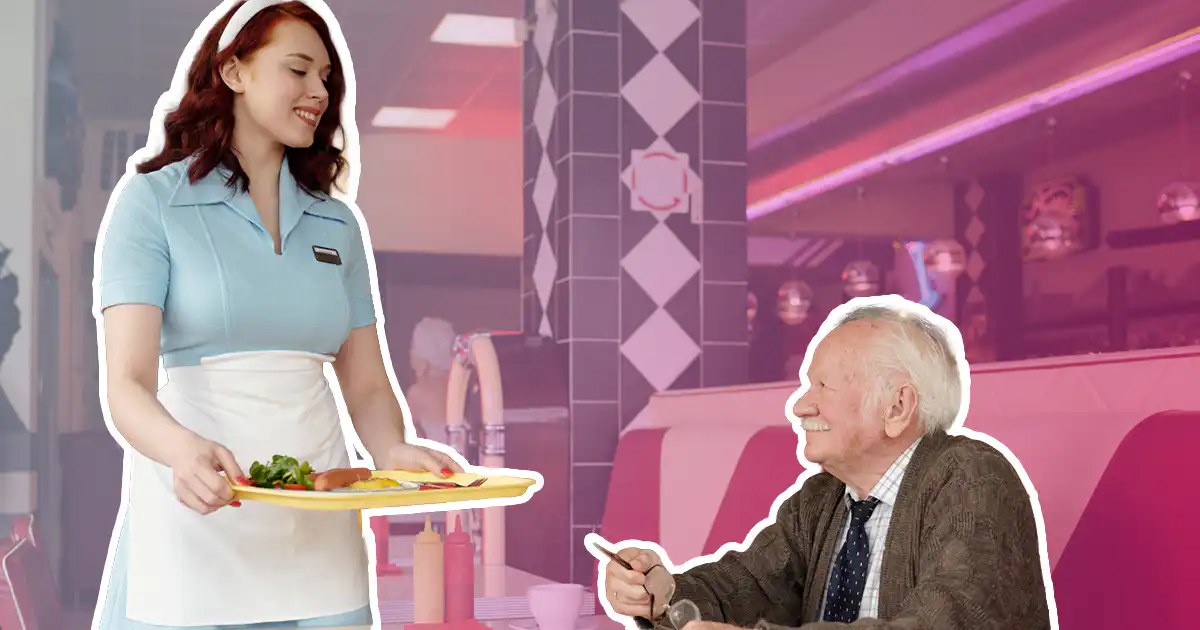
“Where are you from?” “How long have you worked here?” “What do you recommend—what do YOU like?” Boomers treat servers as people worth talking to, not just order-taking interfaces. They learn names. They ask questions. Sometimes they make conversation that extends the meal by twenty minutes.
This reads as either charming or intrusive to younger diners, depending on the execution. But the impulse itself is generational. Social interaction research shows that Boomers came up in an era where this kind of casual exchange with service workers was standard. Younger generations often find it awkward—for themselves and for the server.
The Boomer isn’t trying to be difficult. They’re just being social in a way that used to be normal.
5. Request modifications like they’re designing a custom meal
No onions. Sauce on the side. Substitute the fries for a salad. Can the chicken be grilled instead of fried? What if they did half portions of two pastas? Boomers approach menus as starting points for negotiation.
Research on menu modification trends shows this habit is actually increasing across all age groups, but Boomers pioneered it. They came up in an era when “the customer is always right” was taken literally, and they internalized that they could ask for what they wanted.
Millennials often won’t modify because they don’t want to be “that person.” Boomers became that person decades ago and never thought twice about it.
6. Linger for hours after finishing the meal
The plates are cleared. The coffee is cold. The check has been paid. And they’re still sitting there, talking. The table has become a living room. Time has lost meaning.
Younger diners, aware of table turn times and the economics of restaurant seating, feel antsy staying too long after a meal. Research on time perception shows generational differences in how people experience obligation to spaces. Boomers see a paid meal as purchasing time. Younger diners see it as a transaction with an implied endpoint.
The lingering drives servers crazy and mystifies younger observers. Boomers don’t notice either reaction.
7. Complain directly to staff instead of leaving a review
Something’s wrong. The wait was too long, the food was subpar, the service was inattentive. A Boomer will tell the manager. Right now. In person. They believe in handling problems face-to-face, in the moment, with the people who can actually do something about it.
Millennials and Gen Z are more likely to say nothing at the restaurant and then leave a detailed one-star review online later. Studies on complaint behavior show this generational split clearly: Boomers prefer direct confrontation; younger generations prefer digital distance.
Neither approach is wrong, but they reflect completely different theories of how problems should be solved. The Boomer wants resolution. The younger diner wants documentation.
Related: 8 Millennial Parenting Moves That Drive Boomer Grandparents Crazy
None of these habits are moral failings. They’re artifacts of different eras, different norms, different assumptions about how restaurants work and what diners are entitled to expect.
Boomers came up when dining out was an event, servers were conversational partners, and the customer’s preferences shaped the experience. Younger generations came up with different rules—more planning, more efficiency, more anxiety about being difficult, more reliance on technology to mediate conflict.
Understanding why Boomers do what they do doesn’t mean you have to adopt their habits. But it might make the next family dinner slightly less mystifying.
They’re not trying to be difficult. They’re just eating dinner the way they learned to.