7 Odd Habits From The ’70s That Actually Made Life Easier

From the outside, a lot of 1970s life looked inefficient. No internet. No GPS. One phone attached to a wall. Stores that closed at 5 PM and stayed closed on Sundays. It seems like everything would have been harder.
But people who lived through it often describe something unexpected: a certain ease that’s hard to explain to anyone who didn’t experience it. Not easier in the sense of convenience—easier in the sense of clarity. The limitations created structure, and the structure created a kind of calm that unlimited options somehow eroded.
Social historians note that the explosion of choice and access in subsequent decades came with hidden costs: decision fatigue, constant availability, the disappearance of natural boundaries. Some ’70s habits that looked primitive were actually solving problems we’ve since reintroduced. Here are a few worth remembering.
Related: Everyday Skills Boomers Were Expected To Have As Kids But Modern Kids Lack
1. Letting the phone ring
If you weren’t home, you missed the call. That was it. No voicemail for most of the decade, no answering machines until late in the era, definitely no way for anyone to reach you while you were out living your life.
This sounds like a problem, but it was actually a built-in boundary. You were unreachable for large portions of the day, and everyone accepted it. The expectation of constant availability didn’t exist, which meant guilt-free disconnection was the default. Research on availability stress shows that the modern pressure to always be reachable is a genuine psychological burden the ’70s simply didn’t have.
2. One TV and scheduled programming
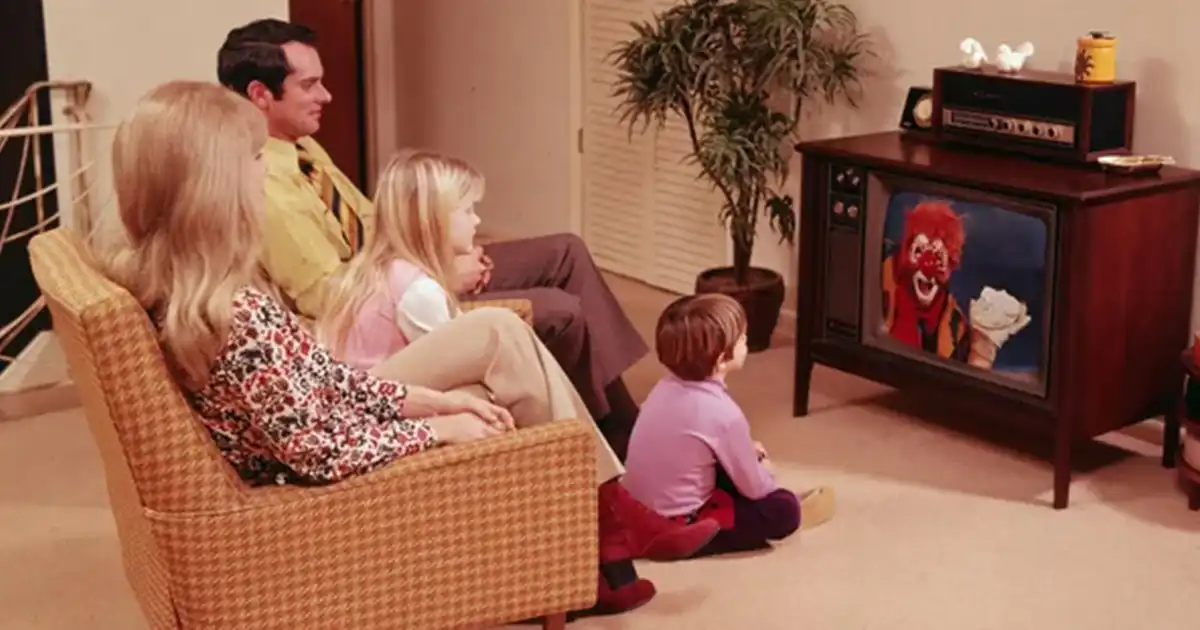
Most families had one television. Whatever was on was what you watched—together. And when the shows ended for the night, the screen went to static or a test pattern. Entertainment had edges. It started and stopped.
This created two things we’ve lost: shared cultural experiences and natural stopping points. You couldn’t binge because bingeing wasn’t possible. You couldn’t watch alone in your room because there was only one screen. The limitations forced presence with family and built-in breaks that infinite streaming has eliminated.
3. Writing things down by hand
Grocery lists. Phone numbers. Directions to someone’s house. Reminders. Everything went on paper, usually in your own handwriting, kept in a pocket or stuck to the fridge.
This seems inefficient compared to notes apps and digital calendars, but research on handwriting and memory shows that writing by hand improves retention significantly compared to typing. People in the ’70s remembered their grocery lists because the act of writing helped encode the information. We’ve traded memory for convenience and now walk through stores checking our phones every thirty seconds.
4. Cash for everything
Credit cards existed but weren’t universal. Most daily transactions were cash. You had a budget because you could see it—bills in a wallet, coins in a jar. When it was gone, it was gone.
The tangibility created natural spending limits. You felt money leave your possession in a way that tapping a card doesn’t replicate. Financial therapists note that this physical relationship with money made overspending harder and saving more intuitive. The abstraction of digital payment removed friction that was actually serving a purpose.
5. Stores closing early and on Sundays
The idea that you couldn’t buy something at 9 PM on a Tuesday or anytime on a Sunday seems absurd now. But the limitations created a rhythm. You planned ahead. You bought what you needed during the hours things were available. And everyone got a collective day off.
Work-life balance research suggests these external boundaries provided rest that individual discipline struggles to replicate. When everything is available all the time, the choice to stop becomes an individual burden rather than a cultural norm. The ’70s enforced rest through limitation, and people actually rested.
6. Making plans and keeping them
You agreed to meet at 7 PM at the restaurant, and then you showed up. There was no texting “running late” or “actually can we reschedule” or “where are you?” at the last minute. You couldn’t coordinate in real-time, so you coordinated in advance and then followed through.
This requirement built reliability as a baseline social skill. Flakiness had higher costs when you couldn’t instantly notify someone of changed plans. People showed up because there was no alternative, and showing up consistently created trust that frictionless rescheduling has eroded.
7. Doing nothing on purpose
There was a habit in the ’70s that’s almost impossible to explain to anyone under 40: sitting. Just sitting. On a porch, in a backyard, at a kitchen table. Not waiting for something. Not filling time before the next activity. Just existing in a moment with no productive purpose.
This looks like boredom, but it was actually a form of rest that constant stimulation has eliminated. Mindfulness research now teaches people to do deliberately what ’70s life provided automatically: unstructured time with nothing competing for attention. The habit of doing nothing wasn’t laziness. It was recovery built into the fabric of daily life.
Related: 9 Things Gen Z Doesn’t Care About At All But Millennials And Boomers Can’t Let Go
The ’70s weren’t better. They had problems we’ve rightly solved—limited information access, less mobility, fewer options for people who didn’t fit the mainstream. Nobody should romanticize the decade wholesale.
But some things that looked like limitations were actually doing quiet work we didn’t notice until they were gone. The boundaries created rest. The inconveniences created intention. The lack of options created clarity.
You can’t recreate the ’70s, and you probably wouldn’t want to. But you can notice which of these old habits were solving problems and ask whether the solutions that replaced them are actually better—or just faster, more convenient, and quietly exhausting in ways the previous generation never had to manage.